
Sometimes caring for creation can feel impossibly large. We hear about climate change, energy security, waste, biodiversity loss and changing weather patterns, and it is easy to wonder what difference one household, one church, or one small community can make. Yet Christian faith has always understood grace as something that takes flesh in ordinary life. Caring for creation begins there: not with perfection, but with paying attention and choosing differently when we can.
I was reminded of this recently when I needed a bike so I could keep up with my boys. I could have bought a new one. Instead, through a charity called Upcycles based at the old Wastebusters site in Boundary Road Alexandra, I bought a second-hand bike.
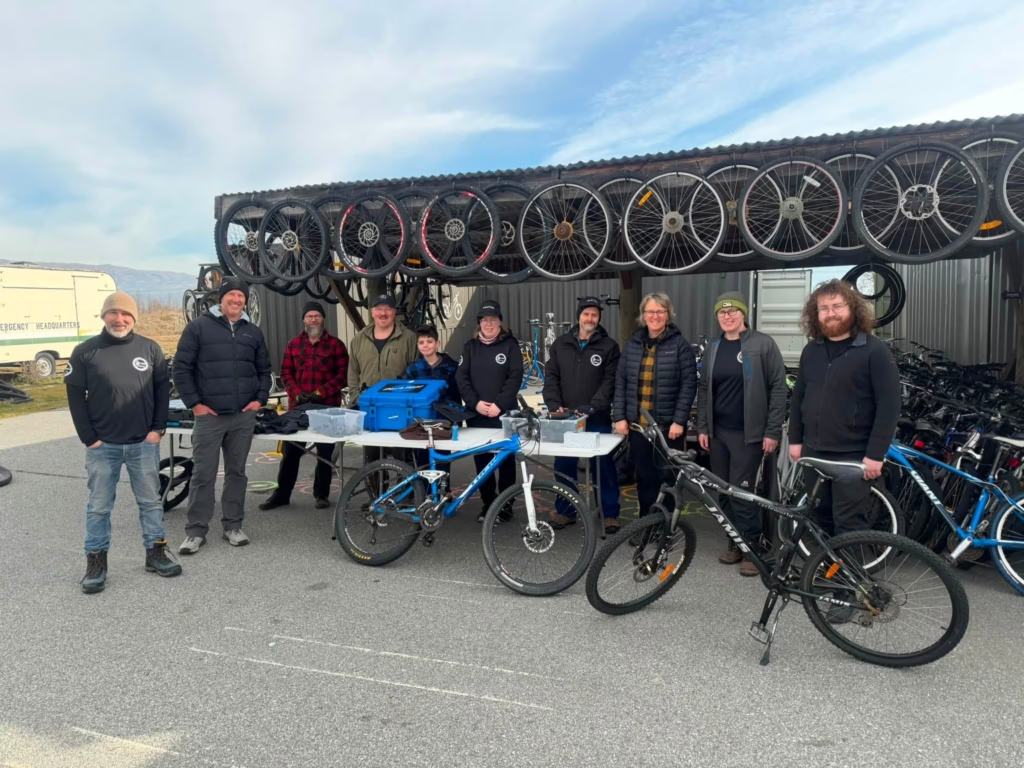
What struck me was that my bike was only one small part of a much bigger story. On the day I visited, volunteers were rescuing bikes from the Cromwell dump, repairing them, swapping parts and finding new homes for machines that might otherwise have been discarded. But it was the human stories of reuse in action that struck me.
A young man on probation needing transport to community service received a bike and helmet. Bikes were prepared for junior doctors staying in hospital accommodation. Another became transport for someone getting to work along Dunstan Road. A three-year-old received his first bike. And a full-suspension Trek was painstakingly restored for a young person in Roxburgh who simply didn’t have the means to buy one.
That is creation care at its best. Something is reused rather than thrown away, but the benefit goes much further than reducing waste. Skills are shared, people are connected, transport becomes accessible, money is saved, and community grows. Environmental care and social good meet each other.
We are seeing an interesting version of that conversation nationally as the 2026 election approaches. Energy has become a significant election issue. On one hand, the Government is progressing plans for an LNG import facility as backup for periods when renewable generation is constrained. On the other, this is becoming something of a solar election. National has proposed a Home Energy Fund offering property-linked finance for solar, batteries and household electrification; Labour has proposed SolarSaver with low-interest finance and targeted assistance; and the Greens are proposing zero-interest clean-energy loans alongside substantial community renewable-energy investment.
And just this week, the Government announced the 500 schools selected for its $30 million Solar on Schools programme, with installations planned over three years and batteries for selected schools where they offer savings and resilience benefits. A number around Central Otago have made the list. Whatever our politics, it is encouraging to see distributed renewable energy moving closer to the centre of our national conversation.
Here in Alexandra, our Parish Council is exploring a similar possibility: working with Alexandra Community House on a solar installation designed to benefit both organisations. That excites me because it asks a deeply Christian question: how can the resources entrusted to us serve not only ourselves, but our neighbours?
Perhaps that is a helpful way to think about caring for creation in this Season of Grace. Buy second-hand when we can. Repair rather than discard. Share what we have. Generate energy where we use it. Think about our neighbour as well as ourselves.
None of these actions will save the world by themselves. But they can become signs of grace: small, practical acts declaring that creation is gift entrusted to us by God, community matters, and another way of living is possible.
Rev Andrew Howley
August 2026